How Whole-Genome Sequencing Improves Rare Disease Diagnosis
Discover how whole-genome sequencing improves rare disease diagnosis by identifying genetic variants, analyzing complex DNA changes, and supporting precision genomics
Whole-genome sequencing (WGS) is transforming the investigation of rare genetic disorders by allowing researchers and clinical genetics teams to examine nearly the entire human genome in a single sequencing approach. By identifying a wider range of genetic variants, including changes outside protein-coding regions, WGS can help explain previously unresolved cases and support more precise molecular diagnoses.
Genomic research combines DNA sequencing, laboratory quality control and computational interpretation.
What Is Whole-Genome Sequencing?
Whole-genome sequencing is a genomic analysis method used to determine the order of DNA bases across nearly the entire genome. DNA contains four principal nucleotide bases: adenine (A), thymine (T), cytosine (C) and guanine (G). Their sequence stores biological information that helps regulate cellular processes, protein production and inherited characteristics.
A genetic variant is a difference in DNA sequence. Many variants are harmless, but some can disrupt gene function or influence biological pathways and contribute to inherited disorders. Identifying a relevant variant requires more than reading DNA: the findings must be evaluated against scientific evidence, gene function, inheritance patterns and the individual's observed characteristics.
Unlike tests that examine a small set of selected genes, whole-genome sequencing surveys a much broader range of genomic regions. Depending on the sequencing technology, laboratory validation and analysis pipeline, it can help detect single-nucleotide variants, small insertions and deletions, copy-number changes and selected structural variants.
Why Are Rare Genetic Disorders Difficult to Diagnose?
Rare diseases often present substantial diagnostic challenges because their symptoms may overlap with those of many unrelated conditions. Some inherited disorders affect multiple organs, while others produce subtle changes that become apparent only during childhood, adolescence or adulthood.
Another challenge is genetic heterogeneity. Similar clinical features can result from variants in different genes, while different variants in the same gene can produce a broad range of presentations. A targeted genetic panel may therefore miss a relevant gene or a variant type that was not included in its original design.
Families may undergo multiple specialist consultations, biochemical investigations, imaging procedures and genetic tests before an explanation is found. This extended process is often described as a diagnostic odyssey.

Combining clinical observations with genomic evidence can help investigate complex and unexplained presentations.
Common reasons a genetic diagnosis remains unresolved
Overlapping clinical features
Different rare disorders can produce similar neurological, developmental, metabolic or multisystem findings, making diagnosis based on symptoms alone difficult.
Genetic heterogeneity
Many genes may be associated with a similar phenotype. Broad genomic analysis helps evaluate multiple candidate genes in parallel.
Variants outside coding regions
Some relevant changes occur in introns or regulatory regions and may not be captured by conventional protein-coding exome analysis.
Complex DNA alterations
Structural rearrangements, repeat expansions and other difficult-to-detect changes may require specialized sequencing and analysis methods.
How Does Whole-Genome Sequencing Improve Rare Disease Diagnosis?
The principal advantage of WGS is its broad genomic scope. Rather than limiting analysis to a predefined set of genes or coding regions, it enables investigators to search across a wider range of DNA sequences and variant classes. This can reveal candidate findings that explain a previously unexplained phenotype.
1. Examining coding and non-coding DNA
Protein-coding exons make up only a small proportion of the human genome. Other regions contribute to gene regulation, RNA processing, chromosome organization and other biological processes. Variants in these regions can sometimes affect when, where or how much a gene is expressed.
Whole-exome sequencing primarily examines protein-coding regions, whereas WGS also samples non-coding regions. This broader coverage can help investigate cases in which coding-region analysis has not identified a convincing molecular explanation. However, the biological effect of a non-coding variant is often difficult to establish and may require additional evidence.
2. Detecting a broader range of genetic variants
Rare genetic disorders can arise from several types of DNA variation. WGS can support the detection of multiple variant classes in one analysis, depending on read length, sequencing depth, genome coverage, validated software and laboratory procedures.
- Single-nucleotide variants (SNVs): Changes affecting a single DNA base.
- Small insertions and deletions (indels): Short DNA sequences added to or removed from the genome.
- Copy-number variants (CNVs): Deletions or duplications involving sections of DNA.
- Structural variants: Larger genomic rearrangements, including inversions and translocations.
- Repeat expansions: Abnormal increases in the number of repeated DNA sequences, when supported by the assay and analysis pipeline.
- Mitochondrial DNA variants: Changes in mitochondrial DNA when mitochondrial analysis is included and appropriately validated.
No single sequencing pipeline reliably detects every variant class in every genomic region. Complex variants may require complementary testing, orthogonal confirmation or long-read sequencing.
3. Helping investigate cases with negative genetic tests
A negative genetic panel or whole-exome sequencing result does not necessarily exclude a genetic explanation. The relevant variant may have been outside the regions examined, difficult to detect with the original method or impossible to interpret using the evidence available at that time.
WGS can provide additional information in these unresolved cases by expanding genomic coverage and enabling reanalysis with updated annotation tools, reference databases and gene–disease knowledge. Its value depends on the suspected disorder, previous testing and technical capabilities of the laboratory.
4. Supporting earlier molecular diagnosis
In selected clinical settings, particularly for critically ill infants and children with suspected genetic disorders, rapid genome sequencing can help shorten the time needed to obtain a molecular explanation. The impact depends on sample processing, sequencing capacity, analysis turnaround time and access to specialist interpretation.
Earlier results may help clinical teams refine diagnostic investigations and, where relevant, inform care planning, surveillance or family counseling. A sequencing result alone does not determine the appropriate clinical decision.
5. Improving the interpretation of complex phenotypes
Some individuals have clinical features that do not fit neatly into a single known disorder. Genome-wide analysis can help evaluate multiple candidate genes and identify the possibility of more than one molecular diagnosis. This is sometimes called a blended phenotype.
When the genomic findings are considered alongside detailed clinical phenotyping and family history, they may help clarify why several apparently unrelated features occur in the same individual.
Which Genetic Variants Can Whole-Genome Sequencing Help Identify?
A major advantage of genomic sequencing is the ability to evaluate several categories of genetic variation. The table below summarizes common variant classes relevant to rare disease research and their potential significance.
| Variant class | What changes? | Potential relevance to rare disease research |
|---|---|---|
| Single-nucleotide variant | One DNA base is changed. | May alter protein sequence, RNA processing or gene regulation. |
| Insertion or deletion | A short DNA segment is added or removed. | Can disrupt a coding sequence or influence gene function. |
| Copy-number variant | A genomic segment is deleted or duplicated. | May change gene dosage or affect several neighboring genes. |
| Structural variant | A larger DNA segment is rearranged. | Can interrupt genes or alter genomic organization. |
| Repeat expansion | A repeated DNA motif occurs more times than expected. | May be associated with specific inherited repeat-expansion disorders. |
| Non-coding variant | A change occurs outside a protein-coding exon. | May influence transcription, splicing or regulatory activity. |
Finding a variant does not automatically establish a diagnosis. Researchers and clinical genetics teams must assess its frequency in reference populations, predicted functional impact, inheritance pattern, supporting literature, segregation data and compatibility with the individual's phenotype.
How Does the Whole-Genome Sequencing Workflow Work?
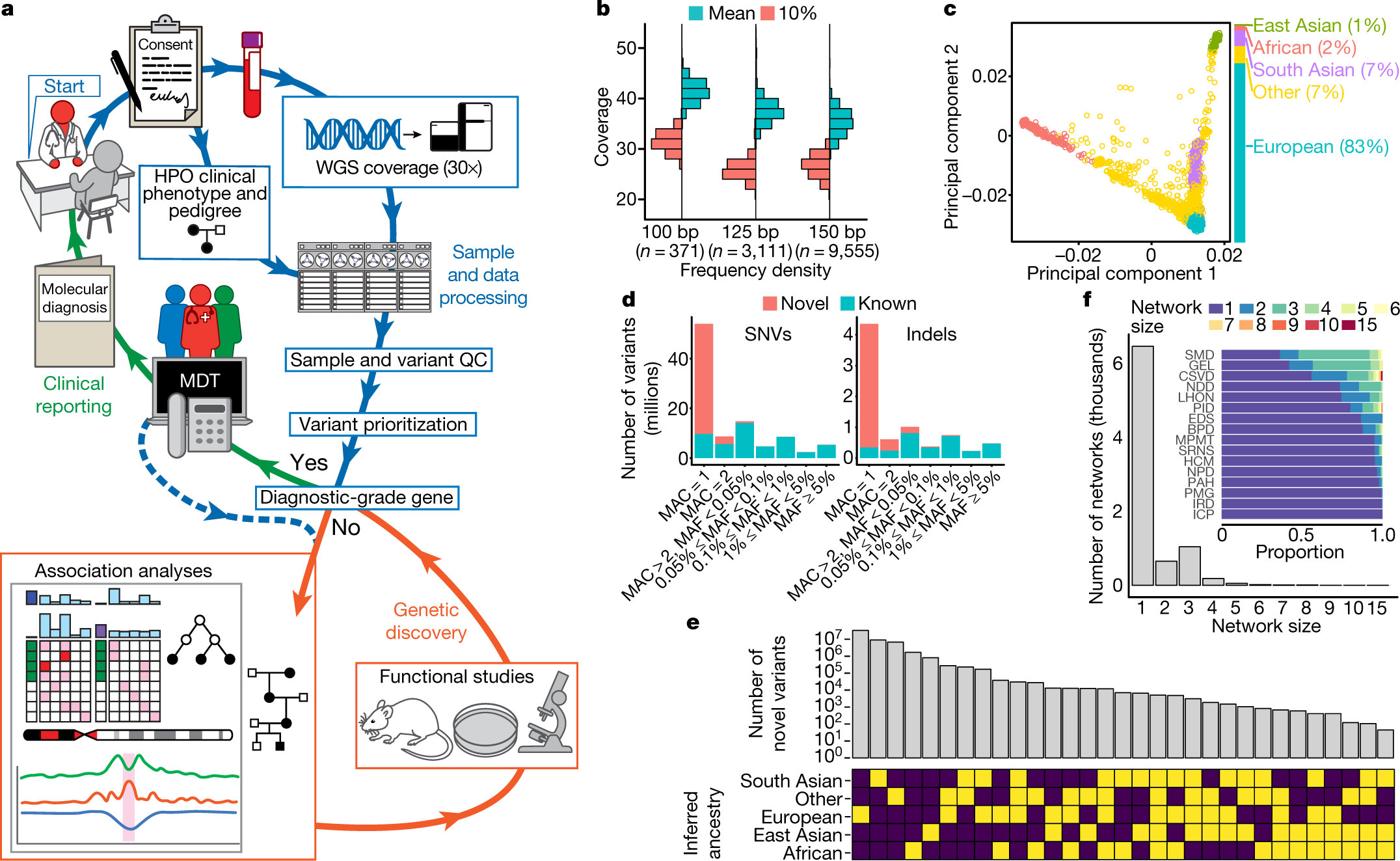
A whole-genome sequencing workflow combines laboratory preparation, high-throughput sequencing and computational analysis. Each stage influences the reliability and interpretability of the final result.

Laboratory preparation and sequencing quality control are essential parts of genomic analysis.
Step 1: Sample collection and DNA extraction
Depending on the testing protocol, a biological sample such as blood or saliva may be used to obtain genomic DNA. The laboratory evaluates sample identity, DNA quantity, purity and integrity according to its validated procedures.
Step 2: Library preparation and sequencing
DNA is prepared for the selected sequencing platform. Sequencing instruments generate reads representing portions of the genome, which are subsequently processed using quality-control methods.
Step 3: Read alignment and genome analysis
Sequencing reads are compared with a reference genome or analyzed using an appropriate assembly approach. Computational pipelines assess coverage, identify sequence differences and evaluate potential structural changes.
Step 4: Variant annotation and prioritization
Bioinformatics tools annotate detected variants and help prioritize candidates using gene function, inheritance models, population frequency, phenotype information and available scientific evidence.
Step 5: Interpretation and confirmation
Relevant findings are reviewed by qualified professionals in the appropriate clinical or research setting. Additional tests, family studies or functional assays may be needed to confirm the significance of a candidate variant.
Whole-Genome Sequencing vs. Whole-Exome Sequencing
Whole-exome sequencing (WES) and whole-genome sequencing (WGS) are both important approaches to rare disease genetic testing. WES focuses on protein-coding regions, while WGS examines a broader range of the genome. The most suitable method depends on the clinical question, previous test results, resources and the variant classes that need to be assessed.
| Feature | Whole-exome sequencing (WES) | Whole-genome sequencing (WGS) |
|---|---|---|
| Main target | Primarily protein-coding exons | Nearly the entire genome, including non-coding regions |
| Non-coding DNA | Limited assessment | Broader assessment, with interpretation limitations |
| Small sequence variants | Can detect many coding SNVs and indels | Can detect coding and many non-coding SNVs and indels |
| Structural variants | Detection depends on the variant and method | Can improve detection of several structural variant classes |
| Data volume | Generally lower | Generally higher |
| Best use | Investigation focused on coding-region variants | Broad genomic investigation, including selected unresolved cases |
WGS is not automatically superior for every diagnostic question. WES may be appropriate when the suspected cause is likely to involve a coding variant and the available test has suitable coverage. Conversely, WGS may be advantageous when a broader variant search is required or earlier testing has not explained the findings.
In some cases, targeted gene panels, chromosomal microarray analysis, biochemical studies, repeat-expansion assays or other specialized methods may provide complementary information. Test selection should reflect the specific question being investigated.
The Role of Bioinformatics and Artificial Intelligence in Rare Disease Genomics
Whole-genome sequencing produces large volumes of data. Bioinformatics converts these raw sequencing reads into organized genomic information that can be compared, annotated and interpreted. Without appropriate computational analysis, identifying a meaningful variant among millions of genomic differences would be extremely challenging.

Computational infrastructure supports sequencing data processing, storage and genomic analysis.
Variant calling and annotation
Variant-calling software identifies differences between sequencing data and the selected reference. Annotation tools then add biological context, such as the genes affected, predicted consequences, population frequency and previously reported associations.
Phenotype-driven variant prioritization
A phenotype describes observable characteristics, including developmental findings, physical features and laboratory measurements. Computational tools can compare these features with known gene–disease associations to rank plausible candidate variants. Family history and inheritance patterns can further refine the analysis.
Artificial intelligence and machine learning
Machine learning and other computational approaches can help predict the potential impact of variants, recognize patterns in genomic data and prioritize candidates for further evaluation. Natural language processing can also assist with extracting relevant information from scientific literature and structured clinical records.
These methods support, rather than replace, expert interpretation. Predictive models can produce false positives, inherit biases from training datasets or perform poorly on underrepresented populations. A high computational score is not sufficient evidence that a variant causes a rare disorder.
Reanalysis of previously generated genomic data
Scientific knowledge changes as new disease-associated genes are discovered and existing variant classifications are updated. Reanalysis of previously generated sequencing data can therefore identify candidates that were not recognized during the original investigation.
Reanalysis is especially relevant for unresolved rare disease cases. Its value depends on data quality, access to updated databases, appropriate analysis methods and the availability of additional phenotype or family information.
How Can a Molecular Diagnosis Influence Clinical Decision-Making?
When a clinically relevant genetic finding is identified and appropriately interpreted, it may provide information that was not available from earlier investigations. Depending on the disorder, this can influence several aspects of clinical decision-making.
More specific diagnostic classification
A molecular finding can help distinguish between disorders that share similar clinical characteristics.
Targeted follow-up investigations
Results may guide additional assessments or monitoring when supported by condition-specific clinical guidance.
Family and inheritance assessment
Family testing can help establish inheritance patterns and inform genetic counseling, including discussions of reproductive implications.
Research and future discovery
Unresolved cases and carefully characterized variants can contribute to studies of gene function and rare disease mechanisms.
The clinical value of WGS varies across populations and disorders. A molecular diagnosis does not guarantee that a condition has a specific treatment or that all future clinical outcomes can be predicted.
What Are the Limitations of Whole-Genome Sequencing?
Despite its broad coverage, whole-genome sequencing has important technical, interpretive and practical limitations. A comprehensive sequencing test does not mean that every genetic cause can be identified.
Variants of uncertain significance
Some variants cannot be classified confidently because evidence about their biological effects is limited. These variants of uncertain significance require cautious interpretation and should not automatically be considered causal.
Technical blind spots
Highly repetitive DNA, regions with similar sequences, low-coverage areas and complex rearrangements can complicate analysis. Some repeat expansions, mosaic variants, epigenetic changes and other alterations require specialized methods or separate assays.
Data interpretation and incidental findings
Broad genomic analysis can reveal findings unrelated to the original testing question. Consent procedures, privacy protections and reporting policies are important, particularly when results may have implications for relatives.
Cost, access and expertise
Sequencing availability, reimbursement, laboratory infrastructure and access to genomic specialists vary across healthcare systems. Interpretation also requires reliable reference datasets and appropriate representation of diverse ancestral populations.
Negative results do not exclude a genetic disorder
A negative WGS result means that no reportable explanation was established using the methods and evidence available. It does not prove that the condition has no genetic basis. Additional testing, updated interpretation or future reanalysis may be appropriate in selected cases.
The Future of Whole-Genome Sequencing in Rare Disease Research
Advances in sequencing chemistry, long-read technologies, computational genomics and functional analysis are expanding the range of genetic variation that can be investigated. Long-read sequencing can be particularly useful for complex structural variants, repetitive regions and determining how variants are arranged on individual DNA molecules. Its clinical use continues to depend on validated workflows and suitable interpretation frameworks.
Other emerging approaches combine genome sequencing with RNA sequencing, DNA methylation analysis, proteomics and functional experiments. These complementary methods can help investigate the biological consequences of variants that remain difficult to interpret from DNA sequence alone.
The integration of genomic data with carefully documented phenotypes and family information is likely to remain central to rare disease discovery. As reference databases and gene–disease evidence improve, previously unresolved findings may become easier to interpret.
Whole-genome sequencing is therefore best understood as part of a broader genomic investigation strategy. Its effectiveness depends on combining robust laboratory methods with reliable bioinformatics, scientific evidence and appropriate clinical expertise.
Frequently Asked Questions About Whole-Genome Sequencing
1. How does whole-genome sequencing help diagnose rare diseases?
WGS examines nearly the entire genome, helping identify candidate variants across coding and non-coding regions. It can detect a broader range of genetic changes than some targeted approaches, although detection depends on the assay and analysis pipeline.
2. Can whole-genome sequencing identify a rare disease after a negative exome test?
Yes, in some cases. WGS may identify relevant variants outside the regions adequately assessed by exome sequencing or detect certain structural and other variant classes that were previously missed. It does not guarantee a diagnosis.
3. What is the difference between WGS and WES?
Whole-genome sequencing examines a much broader range of DNA, including non-coding regions, whereas whole-exome sequencing focuses mainly on protein-coding exons. Both approaches can be useful depending on the diagnostic question.
4. How long does whole-genome sequencing take?
The turnaround time varies by laboratory, sample type, sequencing platform and analysis workflow. Rapid sequencing programs may return results within days in selected urgent settings, while routine testing can take longer.
5. Does whole-genome sequencing detect every genetic disorder?
No. Some genetic alterations are technically difficult to detect, while other conditions involve mechanisms that are not fully understood. Some variants cannot yet be interpreted, and certain disorders require complementary testing.
6. What is the role of bioinformatics in WGS?
Bioinformatics processes sequencing reads, identifies candidate variants, annotates their predicted effects and helps prioritize findings using genomic and phenotype information. Expert review remains essential.
7. Can whole-genome sequencing help identify inherited conditions in adults?
Yes. WGS can be considered in selected adult cases involving unexplained clinical features or suspected inherited conditions. Its suitability depends on the phenotype, previous investigations and the guidance of qualified professionals.
8. Why is family testing useful in rare disease genomics?
Sequencing biological relatives can help determine whether a candidate variant is inherited or newly arisen and whether its segregation is consistent with the suspected inheritance pattern. This information can strengthen or weaken a proposed molecular explanation.
9. Can artificial intelligence improve rare disease diagnosis using genomic data?
AI and machine learning can help prioritize variants and compare genomic findings with known gene–disease associations. Their predictions require appropriate validation and should be evaluated alongside established evidence.
10. What happens if whole-genome sequencing finds no explanation?
Depending on the case, the next steps may include phenotype reassessment, complementary testing, family studies or later reanalysis as scientific knowledge advances. A negative result does not necessarily exclude an inherited cause.
Scientific References and Further Reading
For additional information on genome sequencing, rare disease genomics and diagnostic interpretation, consult these scientific publications and resources.
-
Genome Sequencing for Diagnosing Rare Diseases — New England Journal of Medicine (2024)
Research on genome sequencing in families with suspected rare genetic disorders, including cases unresolved by earlier testing.
-
Evidence review and considerations for use of first-line genome sequencing to diagnose rare genetic disorders — npj Genomic Medicine (2024)
Evidence review examining diagnostic yield, clinical utility and considerations for selecting patients for genome sequencing.
-
Toward clinical long-read genome sequencing for rare diseases — Nature Genetics (2025)
Discussion of the potential and remaining challenges of long-read sequencing in rare disease genomics.
-
Bioinformatics of germline variant discovery for rare disease diagnostics: current approaches and remaining challenges
Review of variant discovery, annotation, prioritization and computational challenges in genomic diagnosis.
Educational content only. The information presented here is not a substitute for individualized medical advice, genetic counseling or interpretation of clinical genetic test results.
Explore the Science Behind Genomic Discovery
Whole-genome sequencing connects molecular biology, advanced sequencing technologies and bioinformatics to investigate genetic variation. Explore additional resources covering genomics, DNA analysis, next-generation sequencing and computational biology.
Explore Genomics Research Resources